White Flowers for Spring: How to Grow White Honesty
If you’re looking for a plant that flowers in Spring, has some height to it and is great for pollinators, have you thought about Honesty? A few years ago I spread some seeds in the flower beds on the top lawn and now every Spring we have an amazing display.
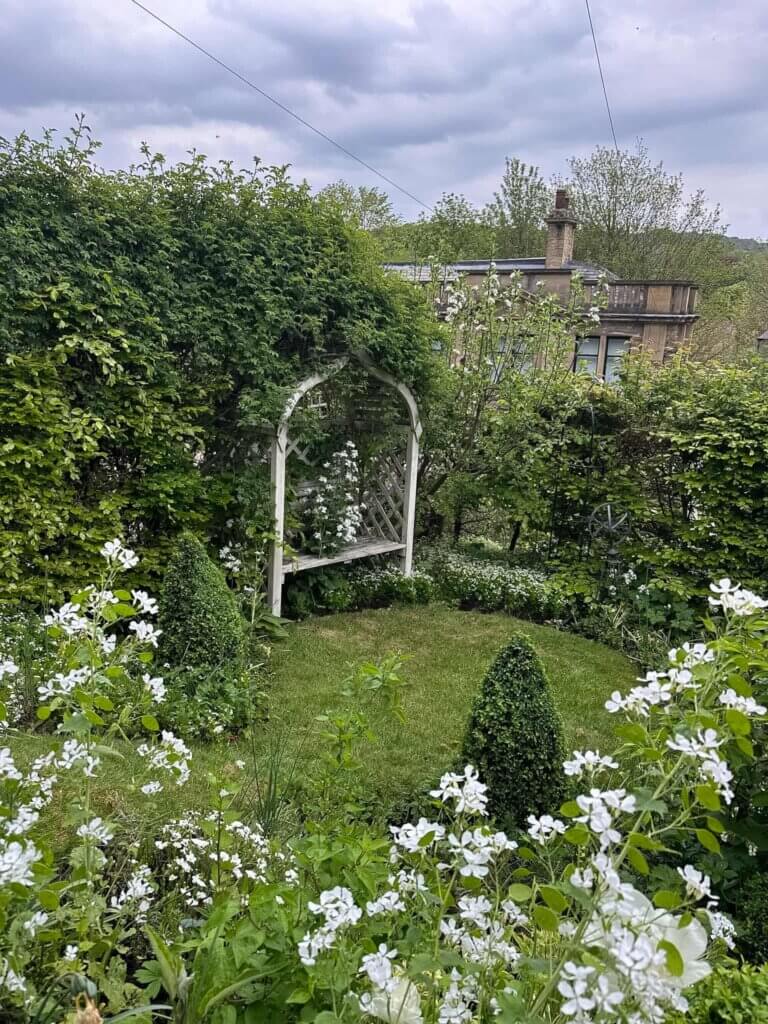
Honesty seems made for a garden like mine. It doesn’t fuss about the light, it self-seeds cheerfully into gaps I didn’t even know I had, and by the time the seed heads turn papery in late summer, it’s given me flowers, food for the pollinators and a good few stems for the house.
What Is Honesty?
Honesty, or Lunaria annua, is a biennial that most people know by one of its other names too, Moon Pennies or the Money Plant, thanks to those flat, silvery seed pods that look like little coins or full moons once they’ve dried out. Mine is the white-flowered form, though the classic cottage garden version is a rich purple. Either way, it’s part of the brassica family, so if you grow cabbages or wallflowers you’ll spot the family resemblance in the heart-shaped leaves.
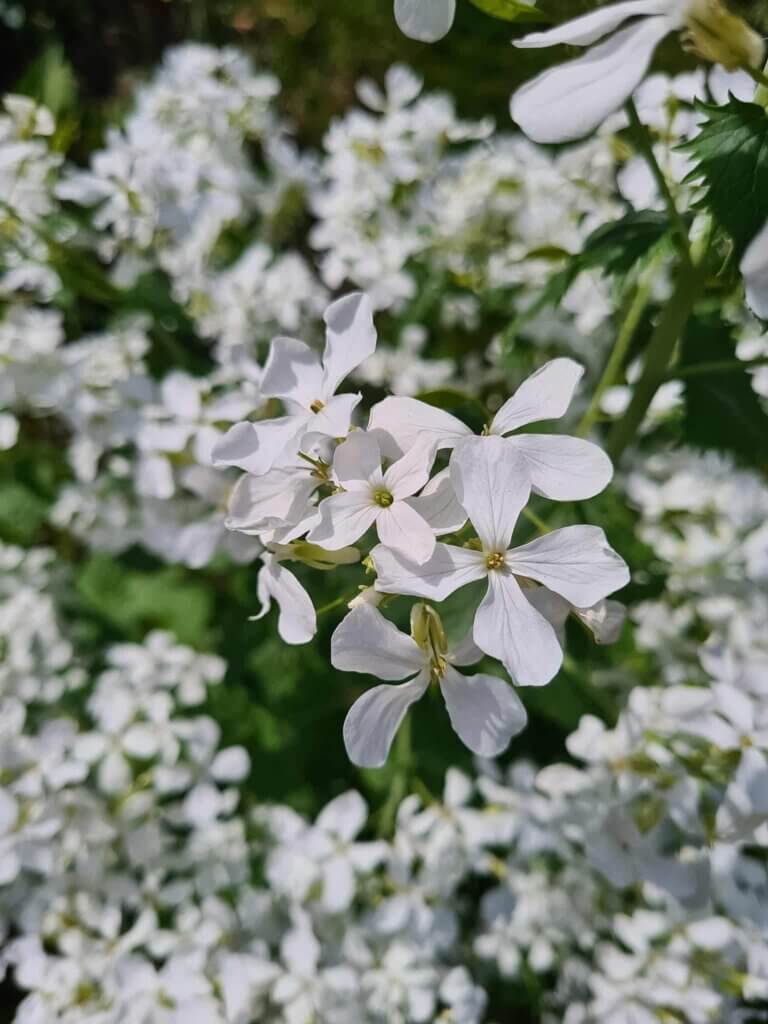
It’s called biennial because it grows leaves in its first year and doesn’t flower until the second, then it sets seed and the original plant dies back. That sounds like a faff, but once you’ve got a patch established, the self-seeding takes care of the cycle for you. I haven’t sown Honesty in years – it just sorts itself out now.
When to Plant Honesty
Sow Honesty seed between late spring and early summer, so any time from May through to July. I scattered mine straight into the border where I wanted it to flower, since it doesn’t love being moved once it’s settled. If you’d rather start it in pots or modules, that’s fine too, just get the young plants into their final spot by autumn so they’ve time to build a bit of root before winter.
That first year, you won’t get flowers. You’ll just get a low rosette of heart-shaped, slightly toothed leaves, which is easy to mistake for a weed if you don’t know what you’re looking for. Be patient with it. The flowers are worth the wait.
When It Flowers
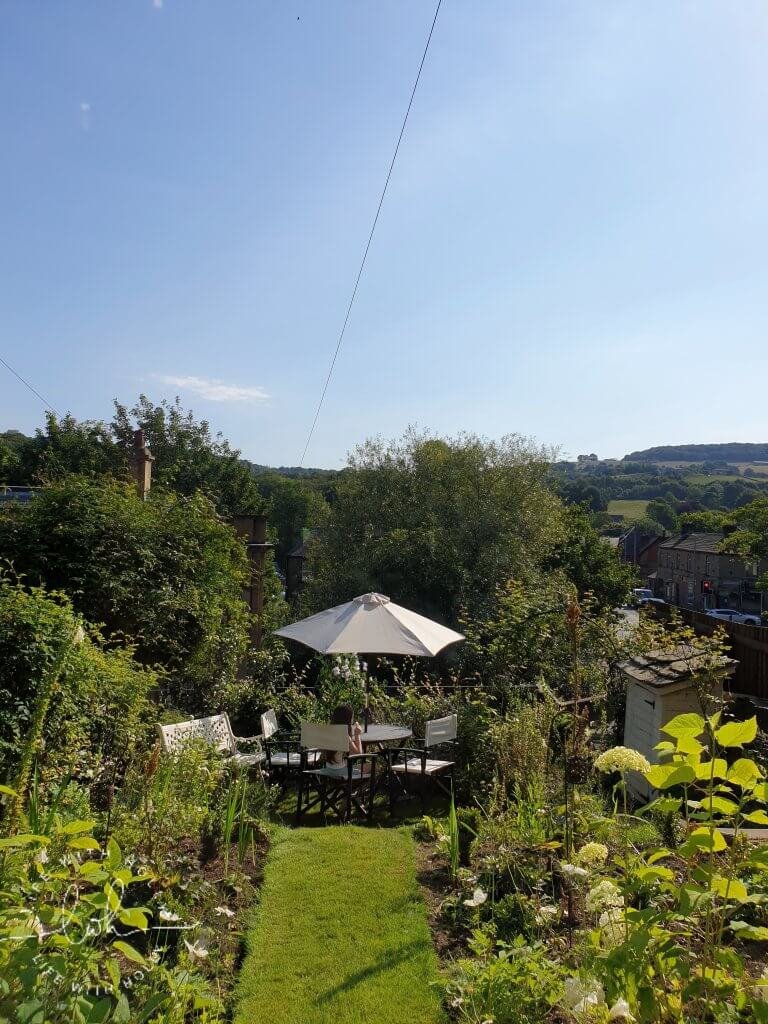
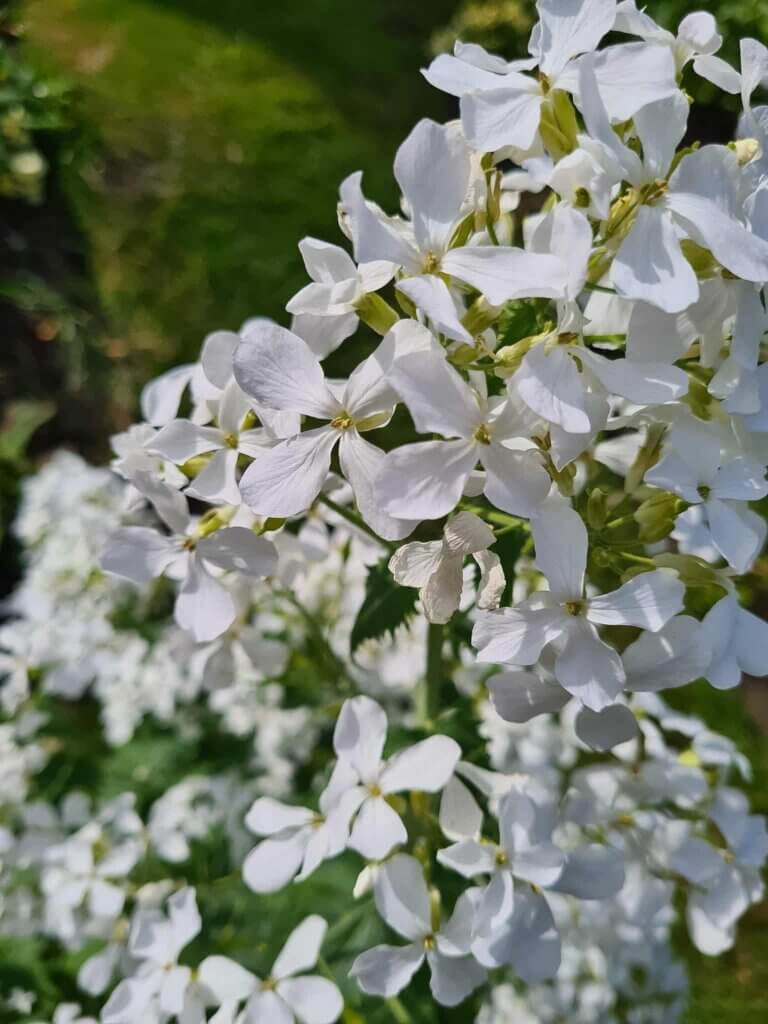
This is where Honesty really shows up. Mine starts flowering in April and carries on into May, which makes it one of the earlier splashes of colour on our top lawn, right alongside the last of the daffodils and the first of the tulips. The white form has a lovely simplicity to it, and on a bright spring morning with the east-facing sun catching it, it’s one of my favourite views from the front step.
Once the Honesty has finished flowering, the Astrantia and Foxgloves are ready to take over and the hydrangea Annabelle is just starting to flower.
Once flowering finishes, the plant channels its energy into those famous seed pods. They start green, then dry down over summer into the translucent silvery discs. I always leave a good number of these on the plant to drop their seed for next year, then cut the rest for dried arrangements. They last for months indoors and need nothing done to them at all.
Soil and Position
Honesty isn’t remotely precious about soil. It’ll grow in anything from a heavier clay to a lighter loam, and it isn’t bothered by chalky ground either. If I had to pick an ideal, I’d say a moist but well-drained soil with a bit of organic matter gives you the strongest plants, but I’ve grown it in the poorer patches of my garden too and it’s never sulked.
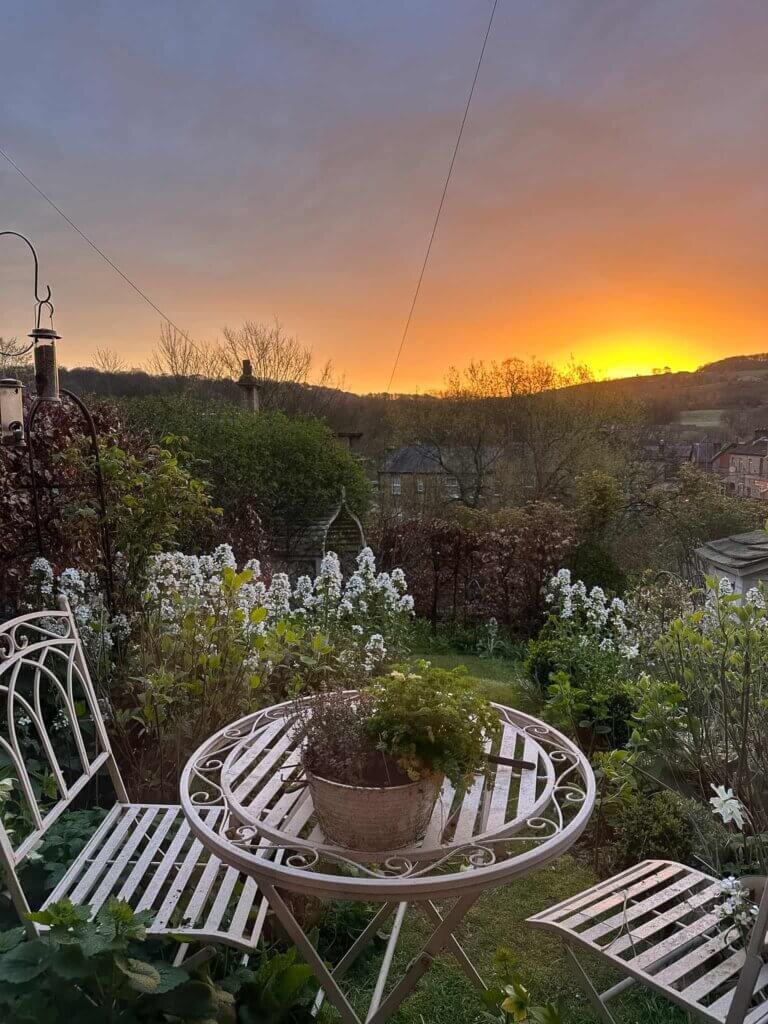
Position-wise, this is a plant for a partial shade to dappled position, which is exactly why it does so well on my east-facing tiers. It gets direct morning sun, then softer light for the rest of the day, and that seems to suit it better than a spot in full baking sun all afternoon. If you’ve got a shady side border, under a tree, or a spot that only really gets light in the morning, Honesty is a strong choice for filling it with something other than bare soil.
Caring for Honesty Through the Year
Once it’s established, Honesty is about as low maintenance as flowers come. A few things that help:
- Water young plants in their first summer if we get a dry spell, but established clumps rarely need extra watering.
- No regular feeding is necessary. Rich soil can actually make it leggy and prone to flopping.
- Deadheading isn’t needed unless you want to limit self-seeding. I let most of my seed heads mature and drop naturally, but it can look a bit messy in the border so feel free to take out as many seedheads you like.
- If it’s self-seeding more enthusiastically than you’d like, simply pull out unwanted seedlings in spring when they’re easy to spot and identify.
- Slugs can take a liking to the young leaves in a damp spring, so keep an eye out early on.
Why I’d Always Make Room for It
There’s something about a plant that asks so little and gives so much back. Honesty flowers early when the garden still feels a bit bare, it feeds the bees and hoverflies at a time when they need it most, and then it hands you a second display later in the year in the form of those papery seed pods. On a tiered garden like mine, where different levels catch the light differently through the day, it’s earned its permanent spot on every tier, popping up in slightly new places each spring.
If you’ve got a shady corner going spare, give Honesty a try!
You might also like: